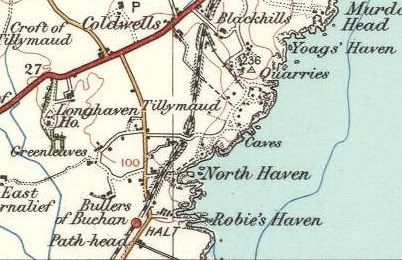
Quarry Line To Cruden Bay
(Update October And December 2016)
Returning to the mainline trackbed I continued towards Buller's. It looked as if the trackbed would go on forever and the railway easily reopened if the thought was there.
However, I was stopped from getting there on the trackbed by a garden fence and the line being blocked on the other side of the railway bridge by a Sawmill that had taken
over the ground right up to the railway perimeter. Walking this section of trackbed was quite comfortable and a real pleasure in the sunny conditions of the day, but with
so much long grass it really needs to be nice and dry, as it was in this instance. You do need to tread carefully as there is some rough ground and the odd pothole that
could catch you out.
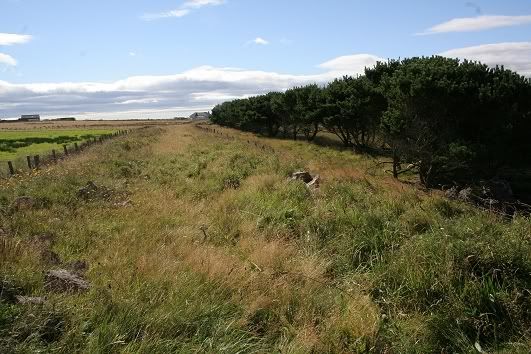
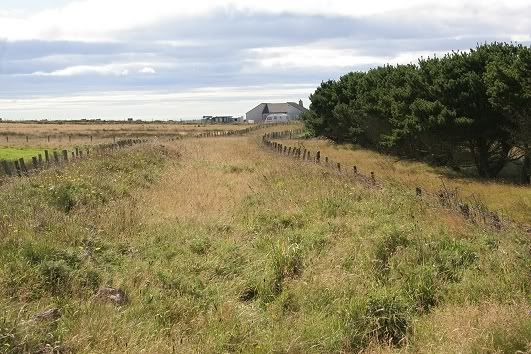
An attractive treelined edging to the wide track bed as it goes towards Cruden Bay. Right: A long righthand curve led me up to the deadend where the owner of the house up ahead has fenced
of the railway.
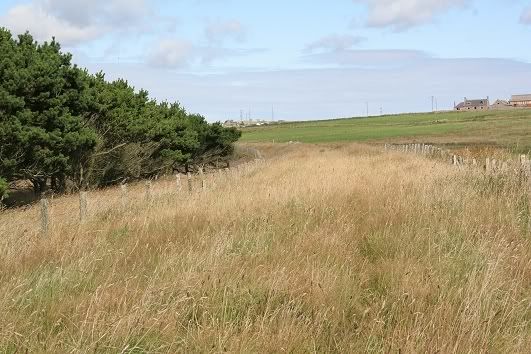

From the same spot, looking back towards Boddam. Is that a train whistle I hear! Right: The 'road' block. The only way out was to climb over the fence on the right and walk along the edge
of the field, where thankfully a break in the fencing by the railway bridge allowed me to get out.
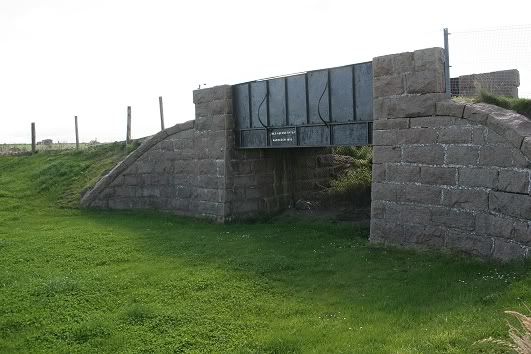
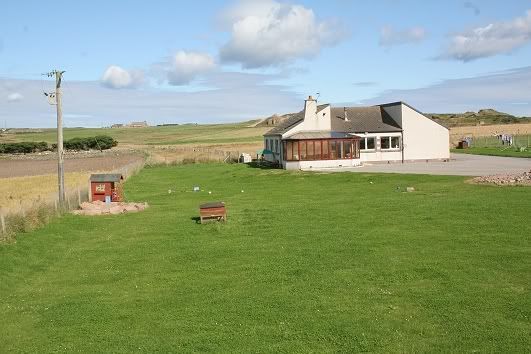
The bridge looks quite good from this side. The well-groomed garden probably helps to keep people at bay. Right: The view from the bridge towards Boddam shows a neat scene and a very pleasant
modern house. The garden has been extended by back-filling the low cutting towards the bridge Behind the house on the left you can see the stone structure by the quarry track bed and to the right
the quarry area.
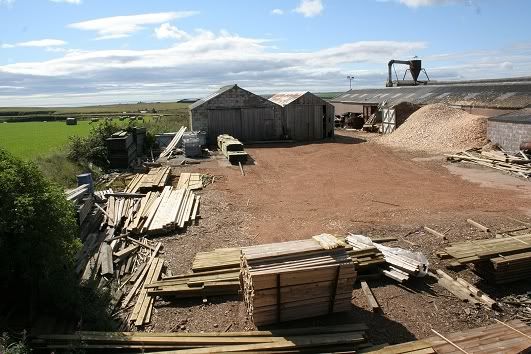
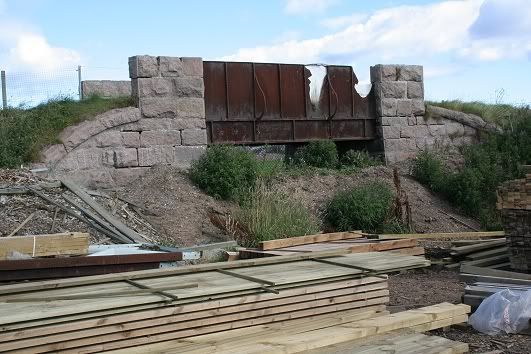
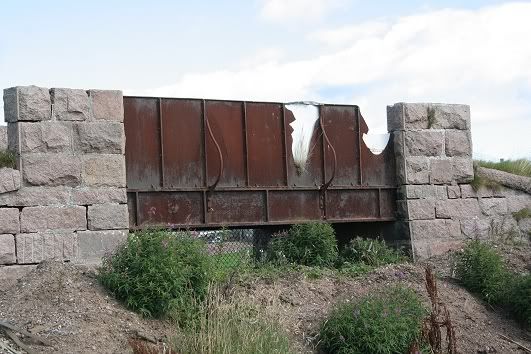
The view towards Cruden Bay. The saw mill has blocked my progressing towards Bullars. The only thing was to walk around the main road, which is a fair little walk compared to the direct distance on
the trackbed. Right: The western side of the railway bridge tells a different story. Both stone and metal work are badly corroded. Again, I asked permission to enter the grounds.
Update: You can get through to the track bed but you will have to ask permission at the Saw Mill.
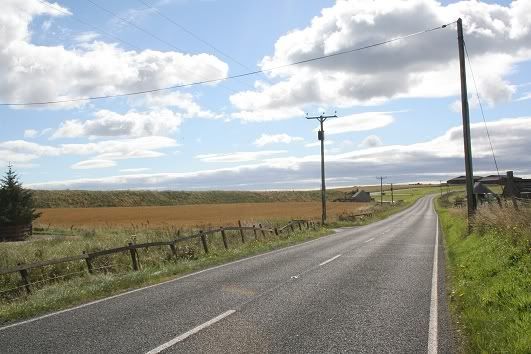
Ditto. Right: Back on the main road with the railway embankment running towards Bullars where it comes to another abrupt end.
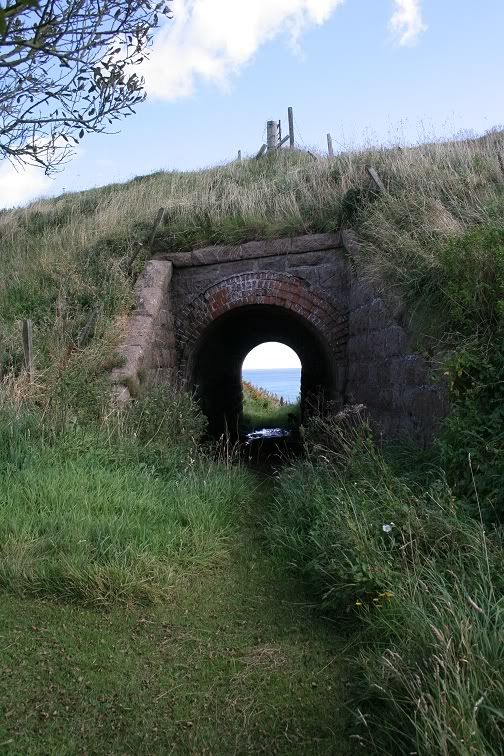
An interesting culvert below the embankment with the North Sea just
ahead. There is an interesting mix of dressed granite and red brick
used for the tunnel. I tried to get up onto the track bed but it was just
too difficult on both sides. The path leads to the Bullars. Update: I
have since found that you can get up onto then track bed from the
other side. There is an opening on the right.
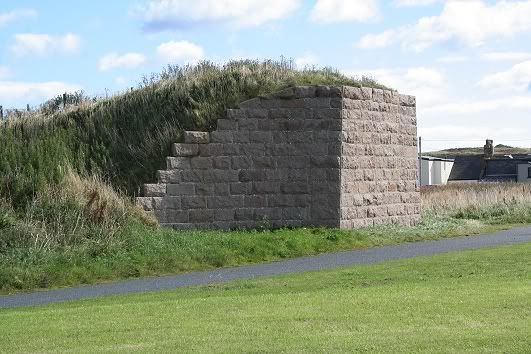
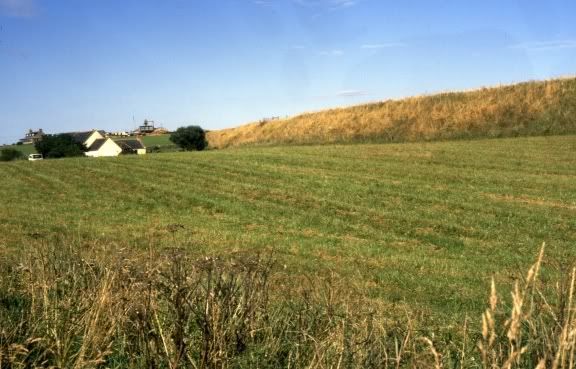
At the road junction for the Buller's O'Buchan the railway has virtually been wiped away for about half of a mile. The buttment is in quite good condition but some of the outer stones are getting to a stage
where they could fall from their settings.
but which doesn't look impossible to pass. Update. I have since found that you can get past the fence.
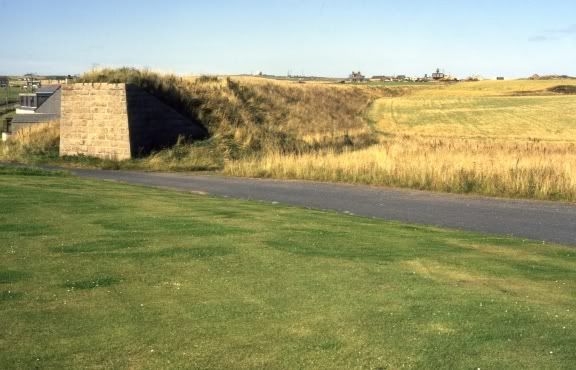
Buller's Halt stood a little way to the left of this scene, where the trackbed has been completely demolished.
The trackbed runs towards Boddam. The Sawmill is seen in the background.
to the Bullers O'Buchan .
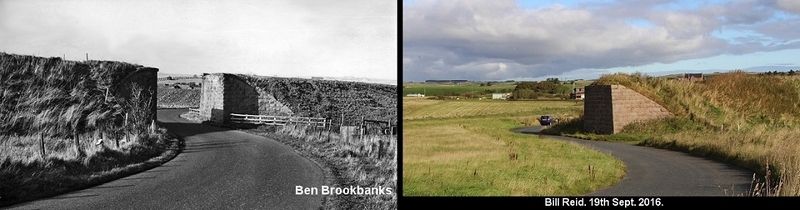
Left: The site of Bullers O' Buchan Halt and the over-bridge before the south embankment was removed and the new road bypassing this spot. It must have been quite a dangerous corner for road traffic
and of course, for hight limitation for lorries. The Halt was on the embankment to the left, just out of site. Right: Present day setting. The S bend in the old road is still the same. The new, wider road
runs along the darker green strip running horizontally just behind. You can see the roof of the house behind the embankment to the right of the embuttment in both photos. Likewise, the white house
seen center left in my photo is also, just, seen to the left of the embuttment in Ben's photo. Likewise, the field beyond the S Bend in the distance is still being cutivated today.
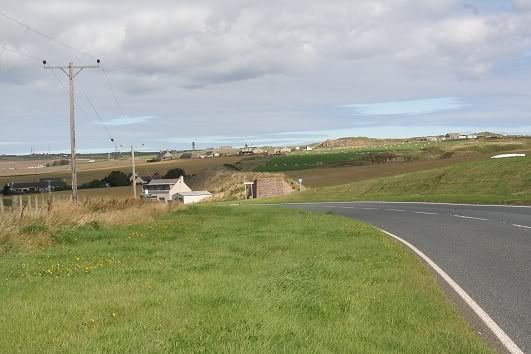
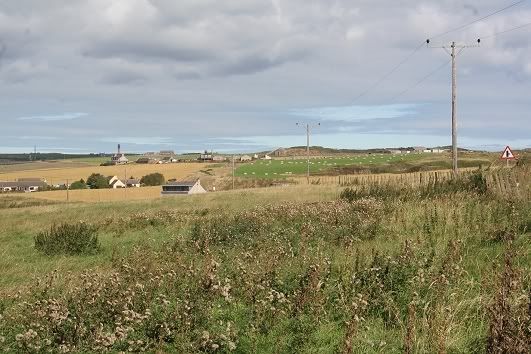
Looking back at the remains of the road bridge, with the quarry in the background. This was approximately the site of Buller's Halt, which stood on the removed embankment. The power station
chimney at Boddam can be seen in the distance, as well as the Sawmill chimney. Right: The track bed is seen winding its way into the distance. The quarry link can just be made out as it runs to
the quarry to the far right. Again, the Power Station chimney at Boddam is seen.
Update October 2016
I managed to return to this site and to walk over the track bed northwards to where it is cut-off by the Saw Mill and back again. From here I walked over the the Bullar's and the small hamlet.
I returned to the old road and walked down towards Cruden Bay, past the site of the old Halt where I got back onto the track bedfore a short distance. My aim was to walk the track bed down
to the road junction at Cruden Bay but the way is blocked by the meeting of three field fences, so had to retun back to the over bridge and onto the main road. However, instead of walking
the road I decided to take the path leading to the ruins of Slains Castle and the path down into Port Erroll village.
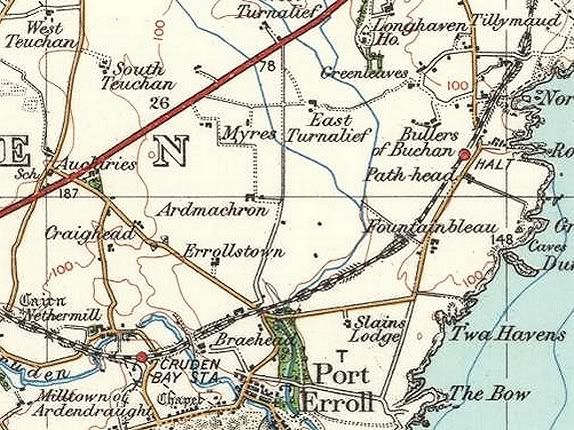
The walk from Buller's O' Buchan Halt and into Cruden Bay
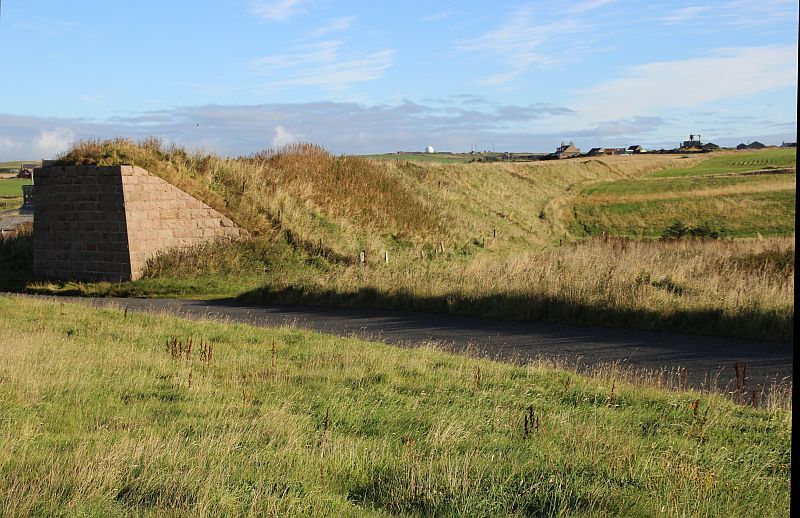
From the embuttment. The embankment running northwards towards where the line is blocked by the Saw Mill.
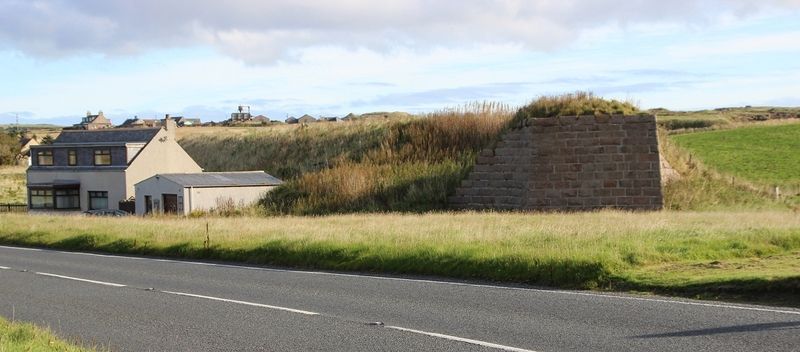
North side of the embankment, towards where the line is blocked by the Saw Mill.
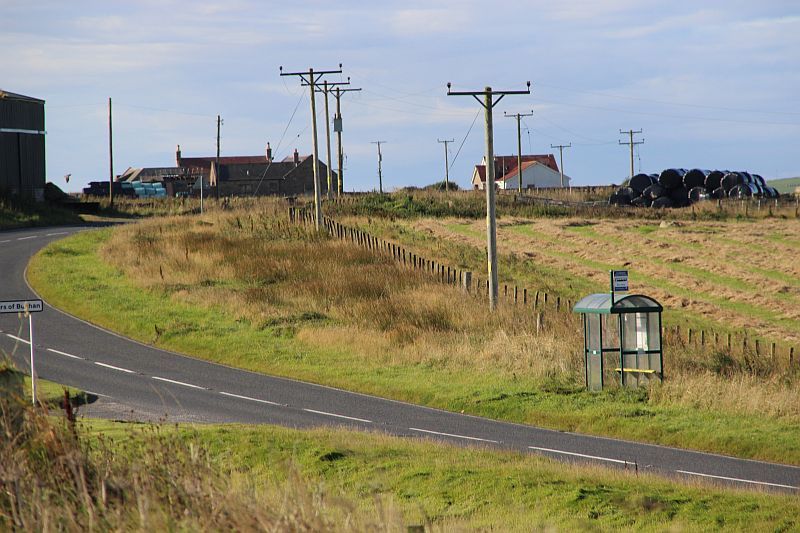
View from the southern end of the embuttment, showing the new road curving past the site of Bullers Halt and where it cuts off the
embankment. The plastic bales stand on the track bed. Just as the halt served the Bullars a modern bus stop on the Aberdeen-Peterhead
service does the same job today. This was very conveniant to me as this is where I got off the buse from Aberdeen to start my walks.
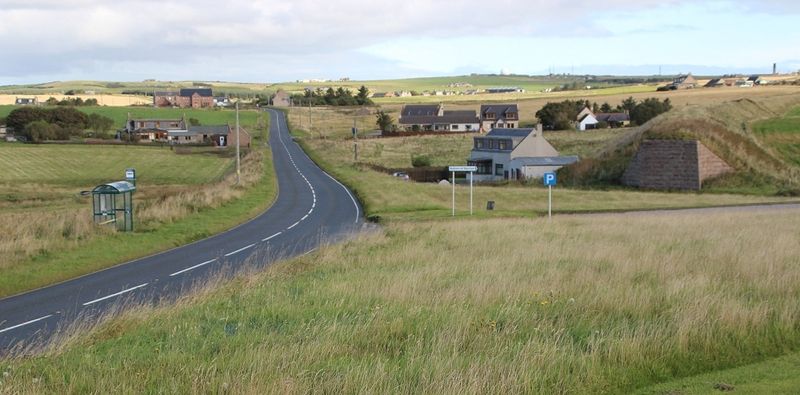
The new road by the site of Bullars Halt and where it cuts the railway off. Shows how the embankment and south side of the railway bridge has
been demolished.
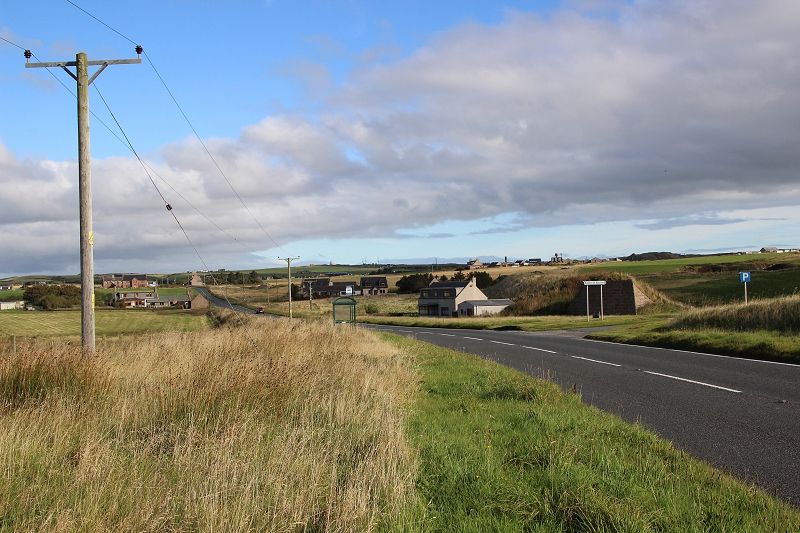
From the site of Bullars Halt, that stood above on the removed embankment.
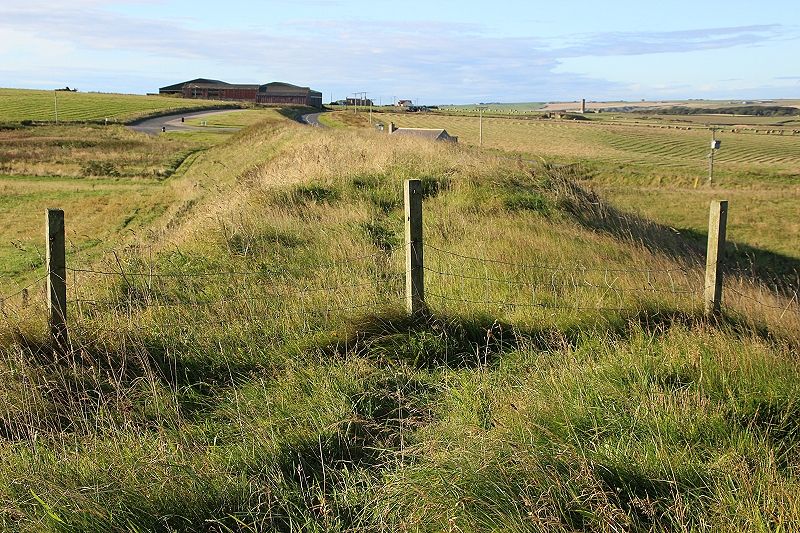
Half way on the embankment, looking southwards towards Bullar's Halt site and to Cruden Bay.
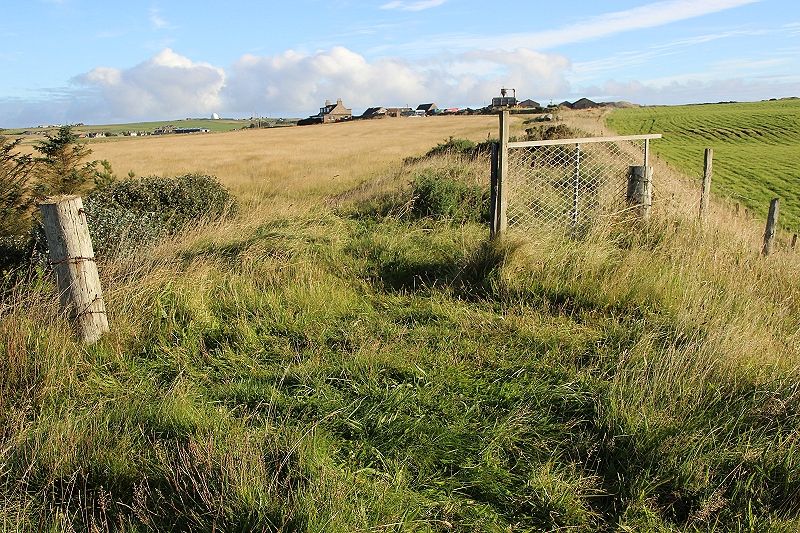
At the spot where the culvert runs below the embankment. Towards the Saw Mill. This must have been fenced off a some time but is now
passable. The grass is quite long and the surface very rough. You need to watch your step. As it rained the day before the grass was also very wet.

The culvert below the embankment. The path leads from the Boddam road to the Bullars.
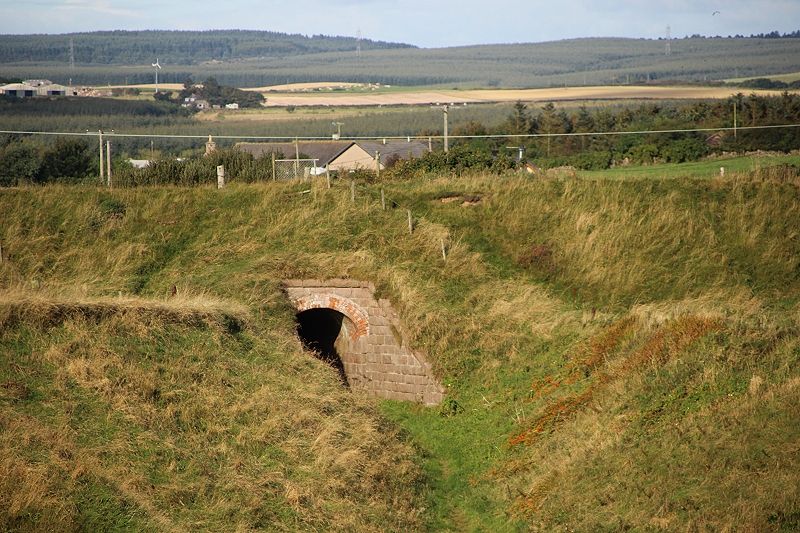
Telephoto view of the culvert and track bed from the path at The Bullars.
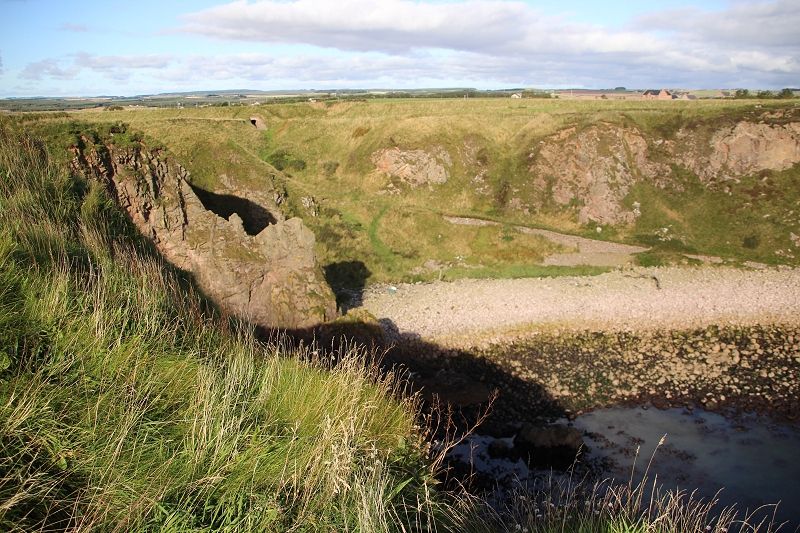
From the same spot a wide angle view of the culvert, and the track bed as you would have seen it from the Bullars' path.
This would have made a nice spot to photograph trains running past. The Saw Mill is just out of site to the far right.

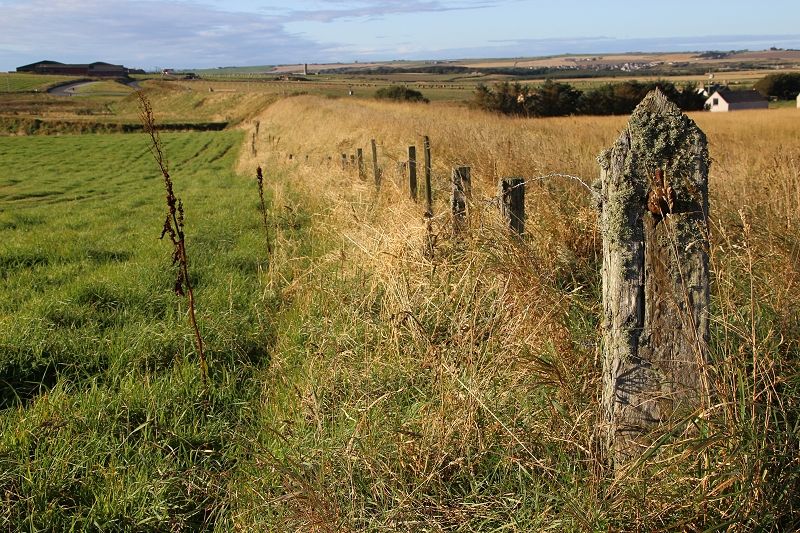
Just south of the saw mill, looking southwards.
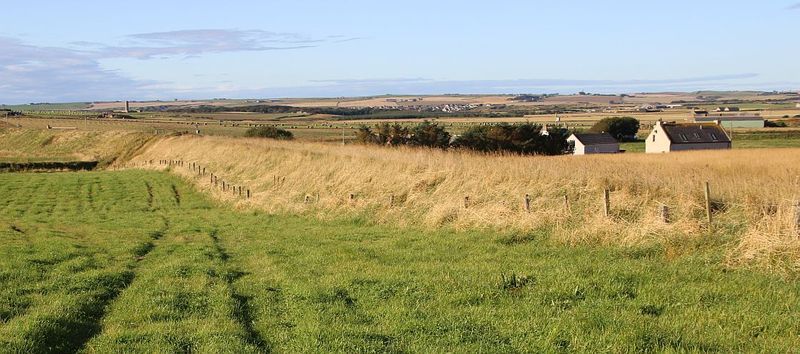
Same spot as above but from within the field on the south side. The embankment still looks quite good as it runs southwards.
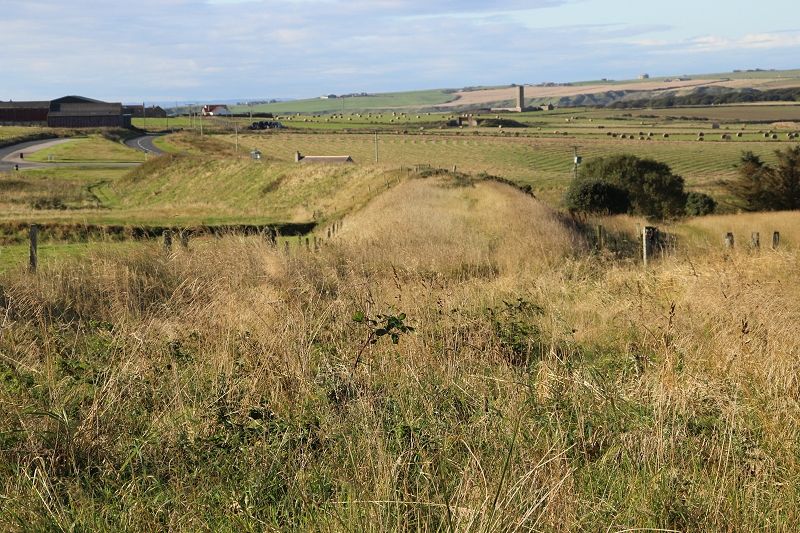
From close to the Saw Mill, the embankment runs southwards to the site of the halt then curving down to the farm over bridge and down to
Cruden Bay on the far right. The stack seen in the background is the remains of Foutainblue Farm. Top right, you see the new road cutting
off the old road and the railway.
==============================================
Continuing my walk from Longhaven where I rejoined the track bed by the old farm access over bridge.
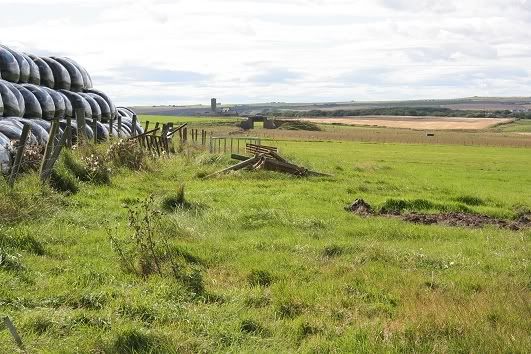

The railway track bed is found again towards Cruden Bay. It ran off the embnakment and became a shallow cutting before going below the bridge in the distance, towards Cruden Bay.
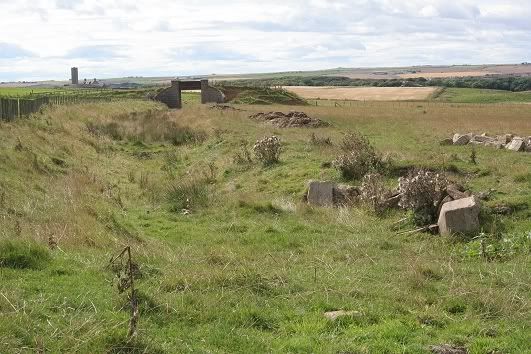
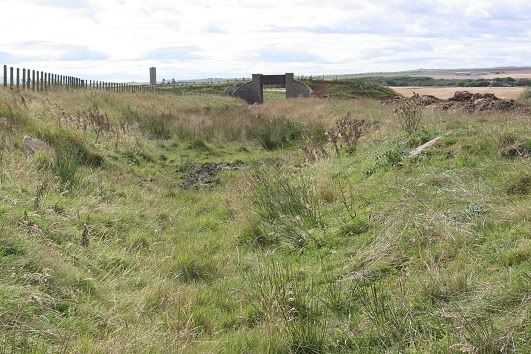
Left: This is where I first thought where the Halt . Right: This sight has all the feel of a railway station that fooled me when I first came across this site.
This is on a rising gradiant and the shallow cutting led to the embankment where the Halt stood.
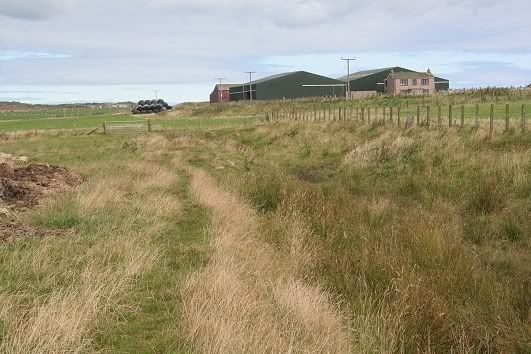
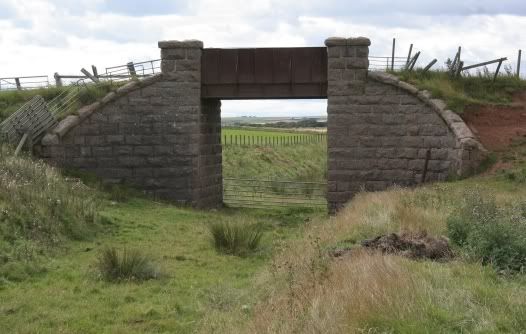
Looking back towards Boddam. The path by the gate, running up to the main road had been a farm level crossing. Right: The bridge is in quite good condition but some of the ground on the right is
crumbling. This was simply a farm access bridge from the main road.

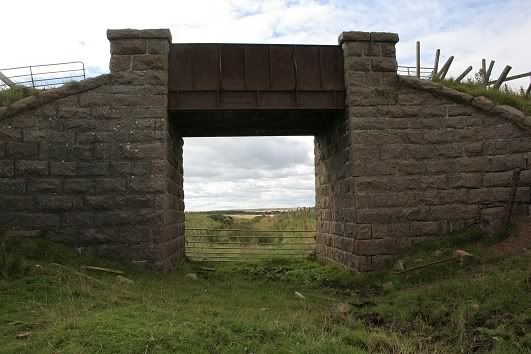
Central view, looking towards Cruden Bay

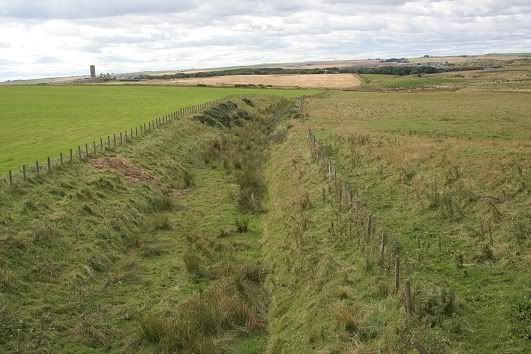
A view from the bridge, towards Boddam. Right: A view from the bridge, looking towards Cruden Bay, seen in the distance. The track bed is clear enough to walk up to the treeline but from a
previous visit to that end of the line I knew that there was no easy way out, therefore I decided to walk the main road to the outskirts of the village.
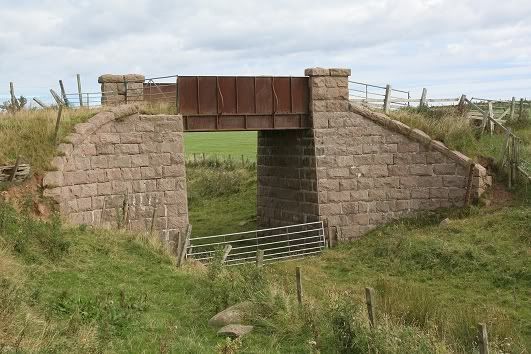
A view of the bridge on the Cruden Bay side. The bridge is gated and locked, which meant another
scamble to get back up to the main road and walk into Cruden Bay.
Update. 17th Sept 2016
On this visit I attempted to try and walk the track bed as far as possible down to the Ex overbridge remains at the road junction for Peterhead and Aberdeen. Just before the site of
the old Brick Works. However, I only got about a quarter of the when my path was blocked at the site where three farms joined together and heavily fenced off. That was a
disappointment as I had to turn back towards the farm overbridge to get back onto the main road. However, even if I had been abl to get to the Ex over bridge at the road junction I
couldn't be certain that I could get back down off the raiway as seeing this from the ex over bridge on a previous vsit I was unable to get up on the track bed at that spot, so perhaps
it was for the best.
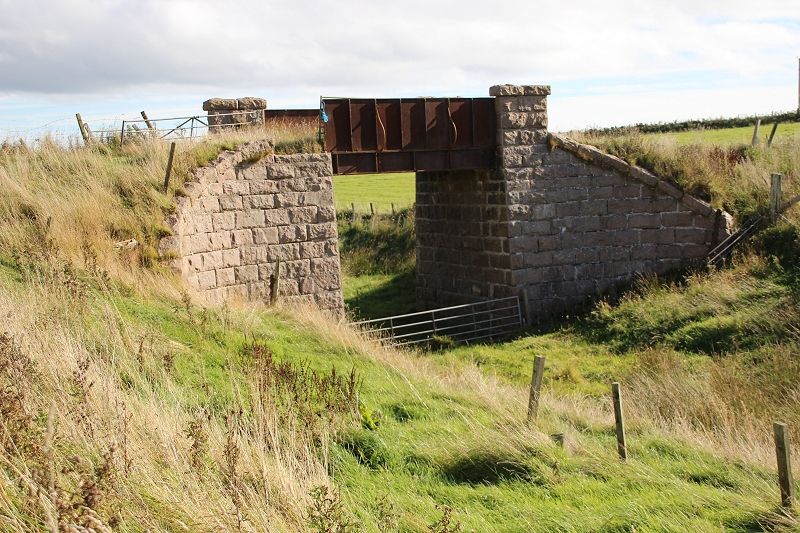
The south side of the farm access bridge.
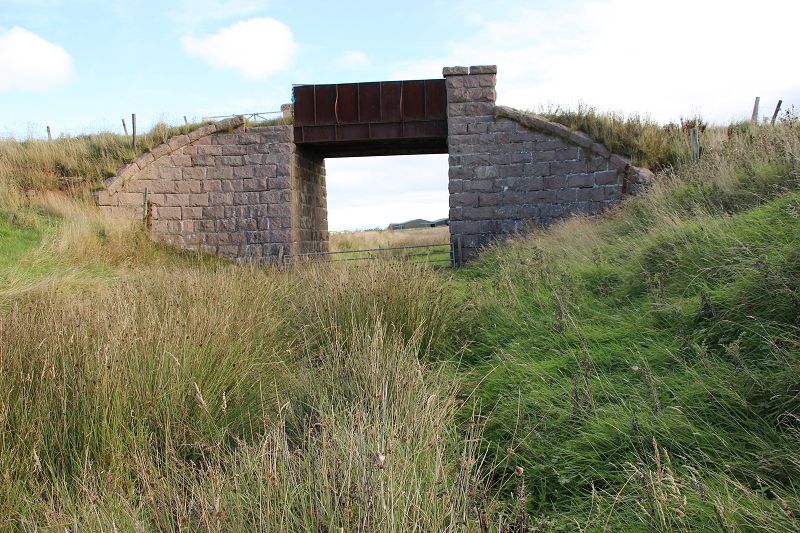
South side of farm access bridge, looking northwards towards Boddam. Note the tall rushes which keep this section very wet and boggy.
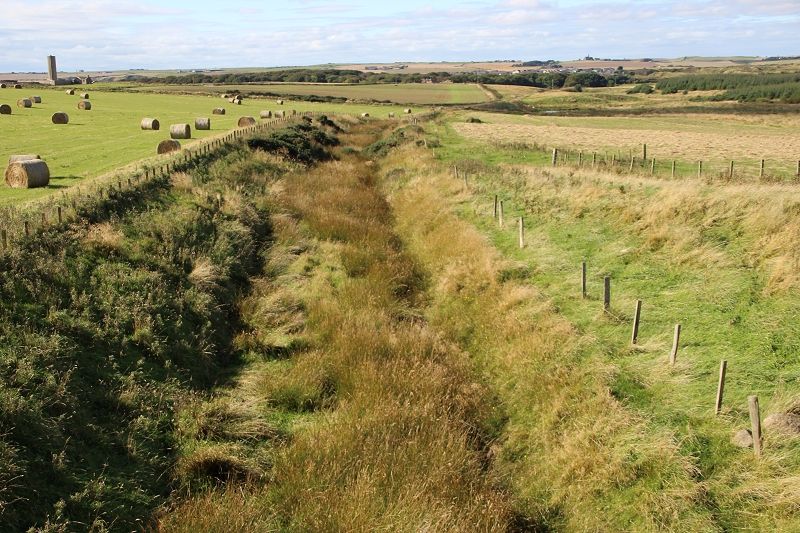
View from the over bridge. Southwards towards Cruden Bay. Ex Foutainblue farm to the left. Note the tall rushes which keep this section very wet
and boggy.
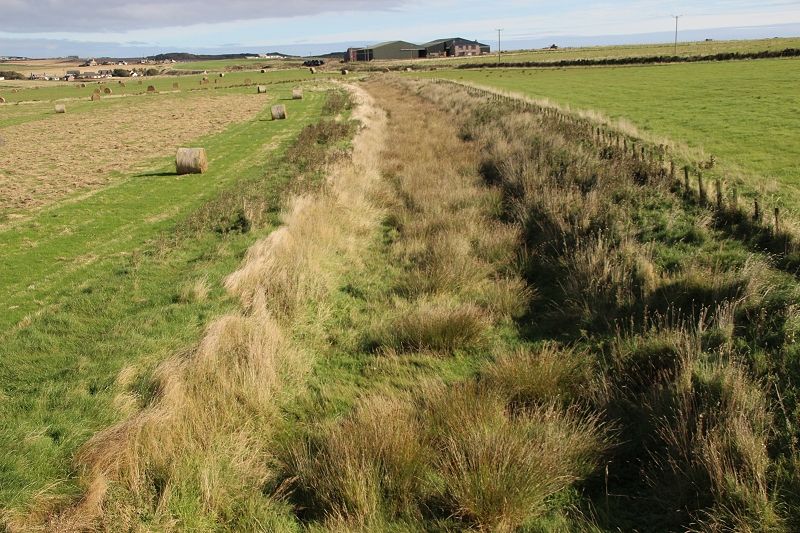
View from the over bridge. Northwards towards Boddam. Your eye is led to the plastic-covered bales that stand on the track bed
and beyond you see the embakment running northwards to the next station stop which was Longhaven.
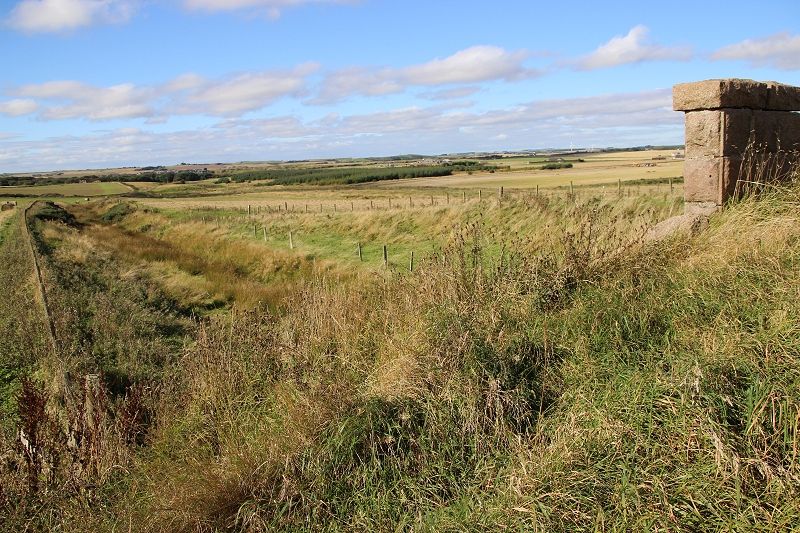
These three views show how overgrown and marshy this section was and why I had to walk down and back along the top edge on the right.

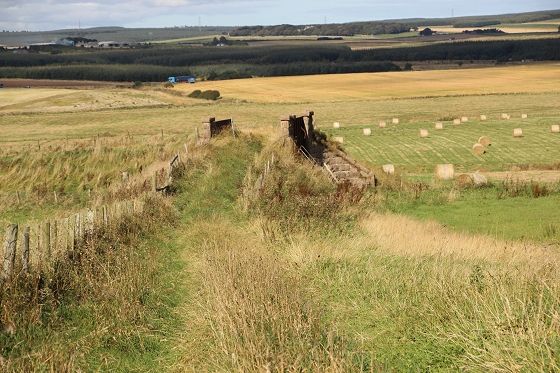
The farm access over bridge as seen from the main road side.
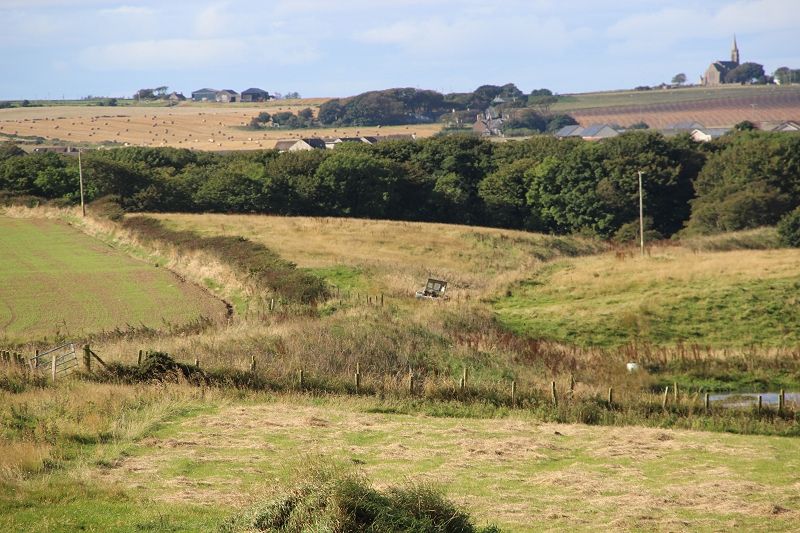
A view, southwards from the over bridge. A discarded boat lays on the track bed up ahead. The track bed drops quite steeply and curves towards the gap
in the trees and the Ex road over bridge at the Fraserburgh-Peterhead road junction.
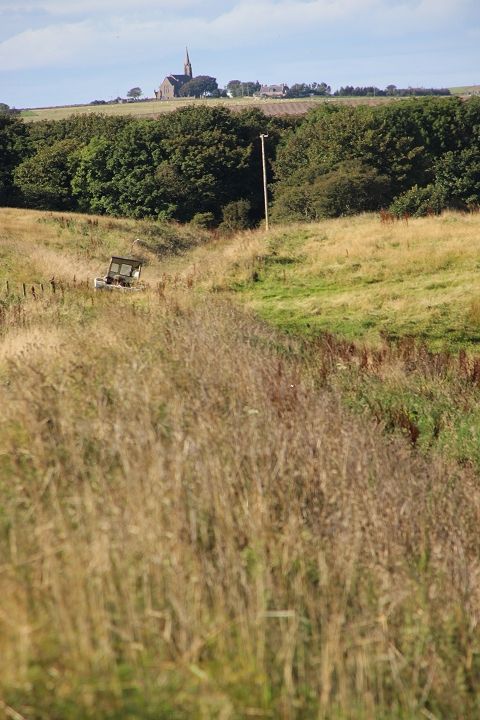
Telescopic view from the fence that stopped me getting down to the end of the track bed at
the road junction by the demolished over bridge. The high church appears closer than it
really is, on the southern outskirts of the village.
================================================================
Update December 2016
My Thanks To Fraser Ross for kindly sending in some comments and photos of the section between Bullars and Cruden Bay where I was
unable to walk further due to some fencing.

From just south of where I had to give up due to fencing. You can just see the abandoned small boat, with the farm over-bridge in the
background.
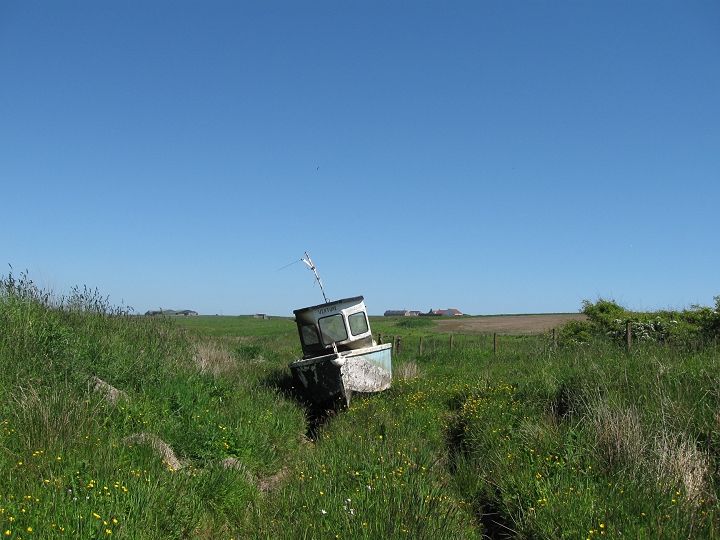
The boat sits in the middle of the track bed.
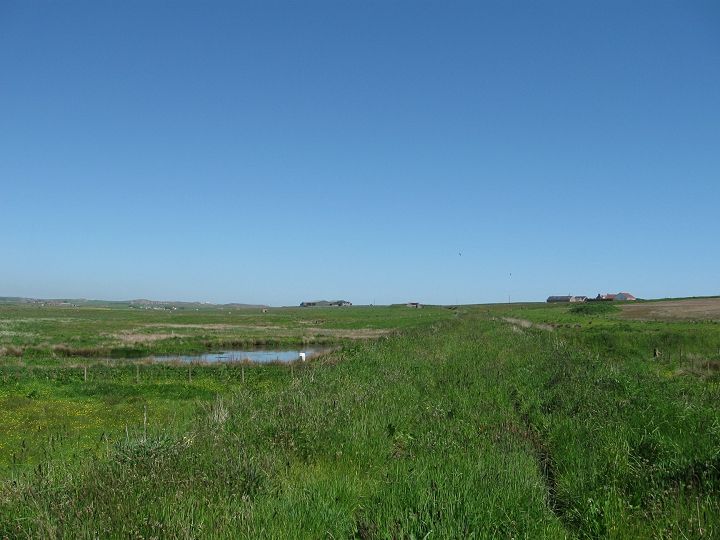
Fom further south again. Looking northwards towards the farm over-bridge.
========================================================================================================

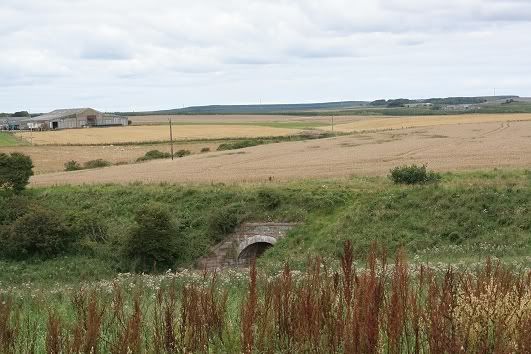
Left: A telephoto view of the bridge from down the main road to Cruden Bay. The line ran in a cutting then on an embankment on the approach to Cruden Bay. This is looking towards Boddam.
Update December 2016 (By Fraser Ross).
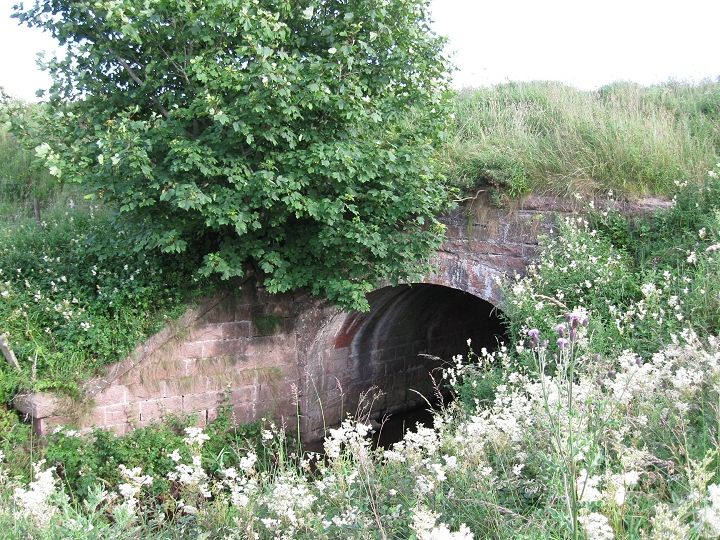
Cruden Bay large culvert. Northend.
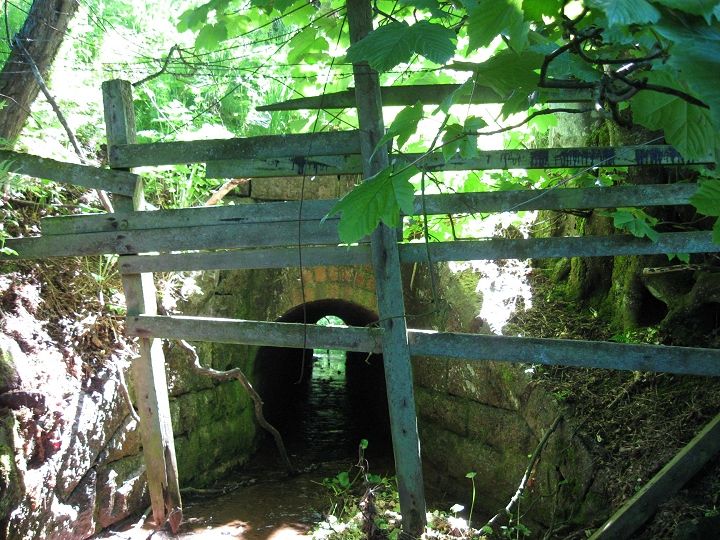
Cruden Baywoods culvert. Northend.
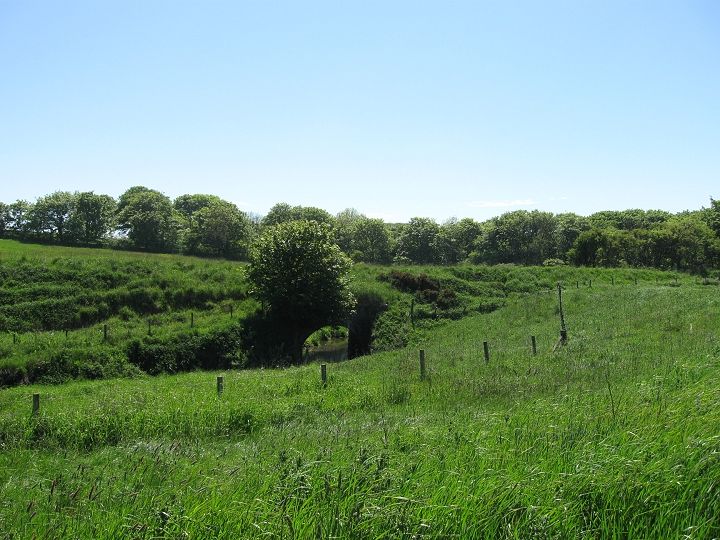
North face of the culvert with the railway embankment above.
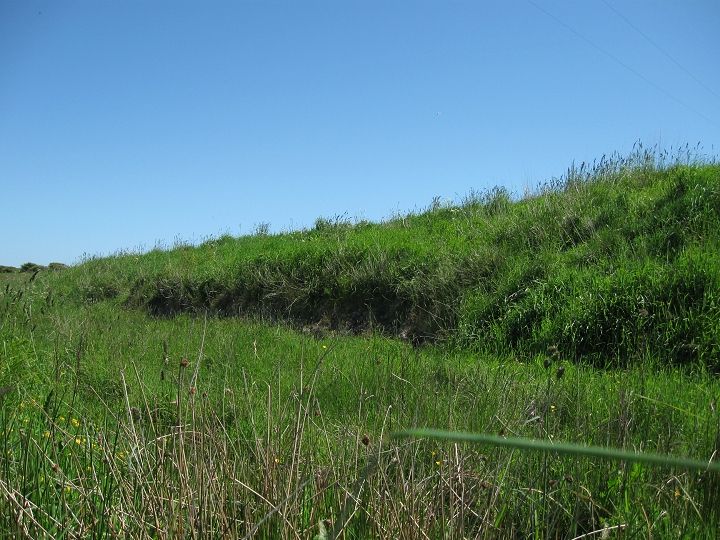
Wall slightly north of Cruden Bay.
=====================================================
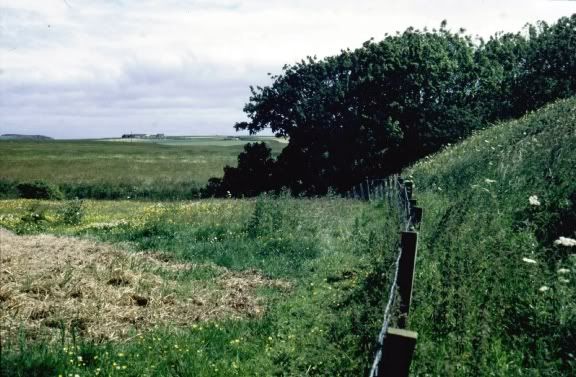
Left: On the opposite side of the Fraserburgh Road Junction the railway ran on the embankment seen here on the right, right with an overgrowth of trees blocking the view towards Buller's Halt. I made the
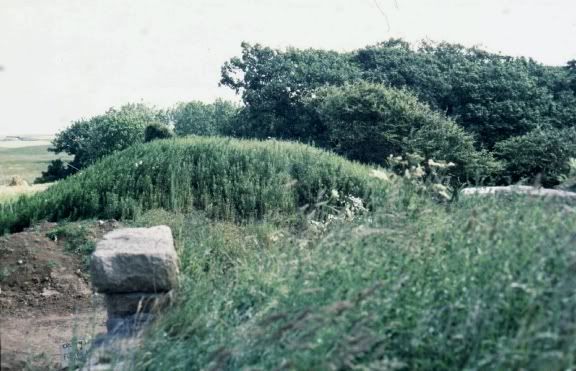
right decision not to try walking the track bed up to this point. Right: Remains of the bridge and the embankment by the Fraserburgh-Peterhead road junction, which runs left to right between the
two mounds of grass. This is looking towards Boddam. Behind me is the remains of the brickworks, which was linked to the railway.